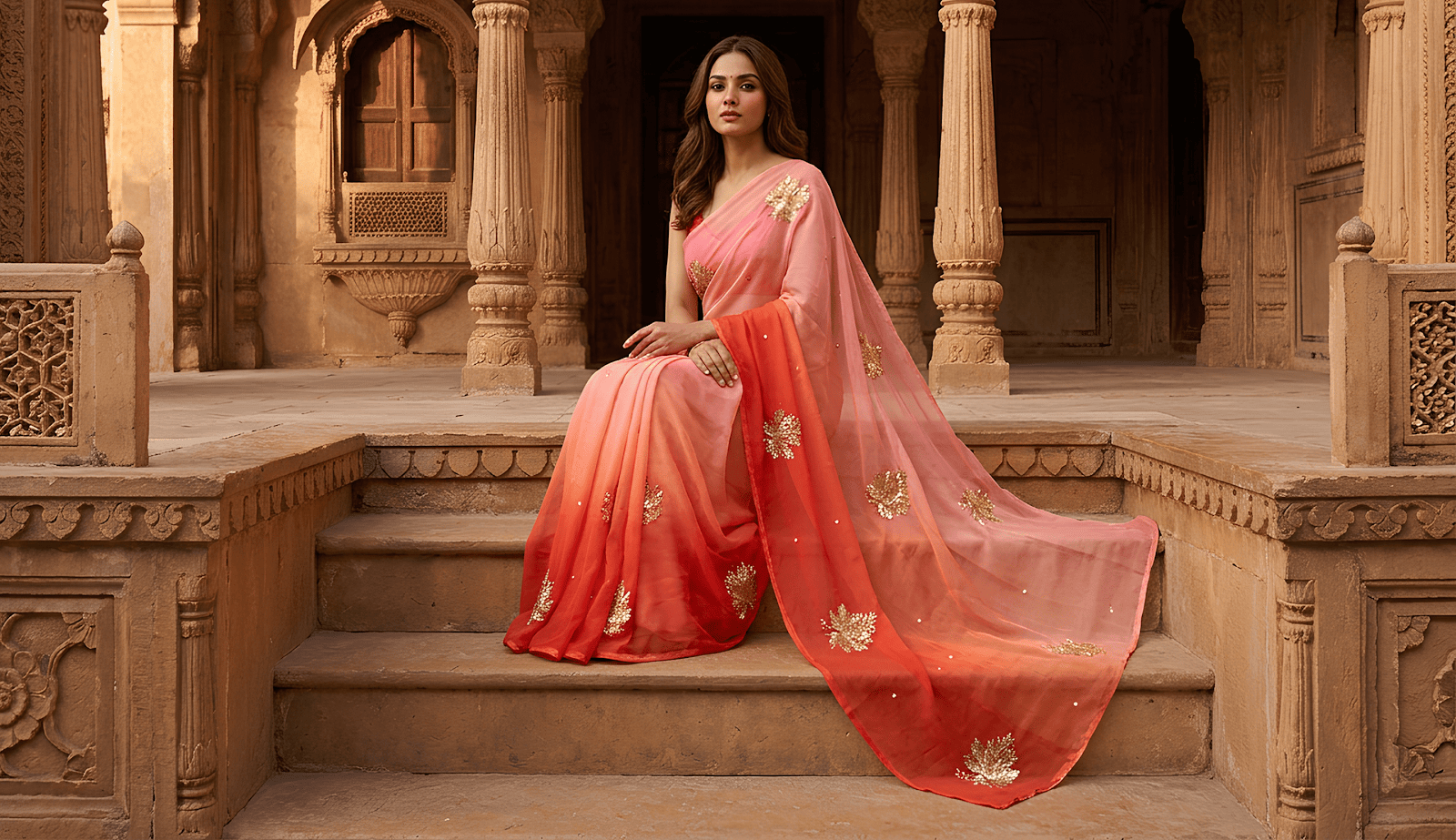
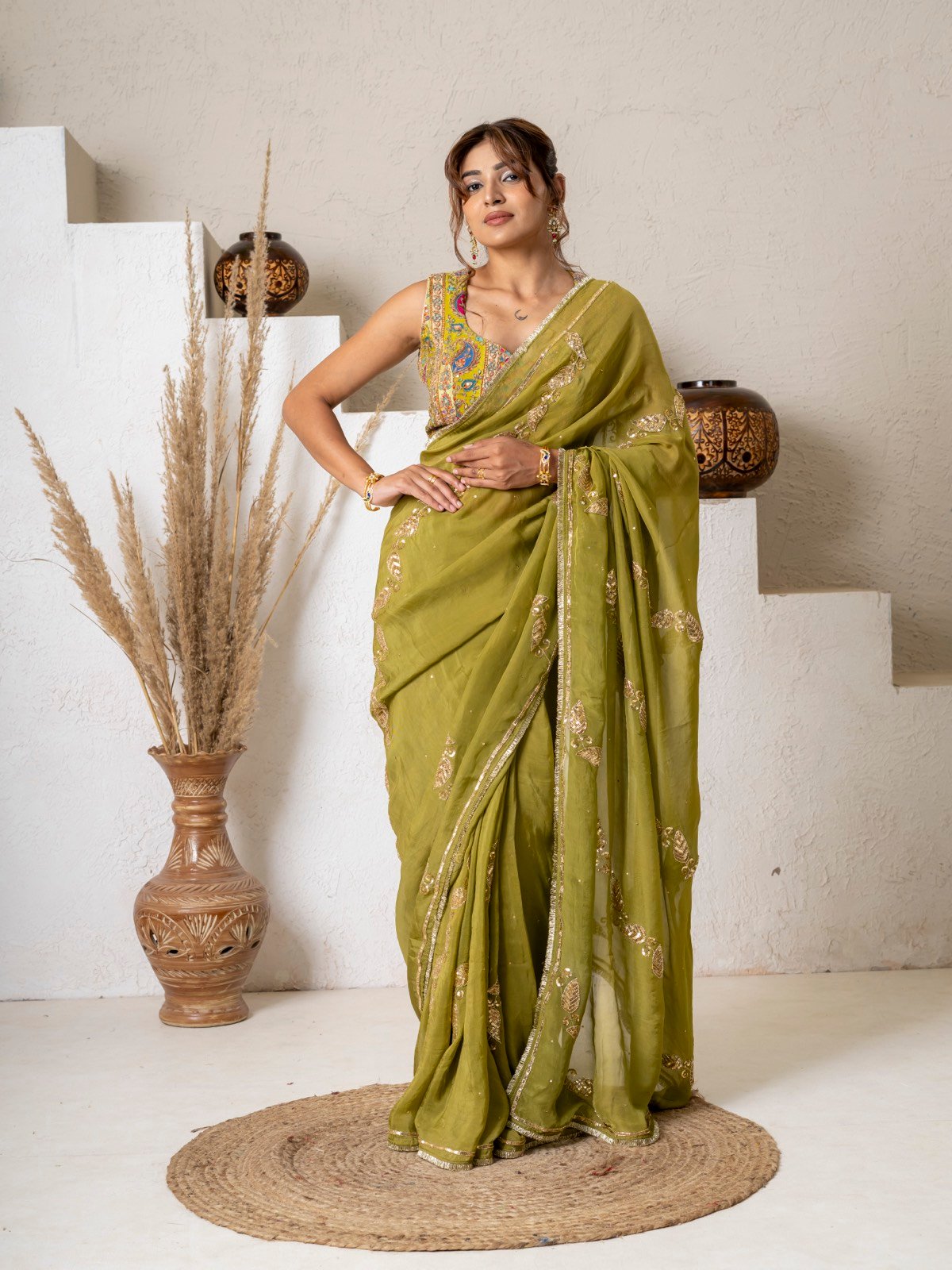


Machine mill sarees have a completely uniform, flat reverse side and stiff plastic-like feel, whereas genuine handcrafted sarees feature intricate hand-knotted floating threads, selvedge pinmarks, and organic drape.
In an era flooded with high-speed digital polyester prints masquerading as handloom, discerning genuine artisan craftsmanship has become an essential skill for the true saree connoisseur. An authentic handcrafted saree carries the soul, patience, and subtle touch of human hands that no machine can duplicate.
1. Inspecting the Reverse Zari Weave
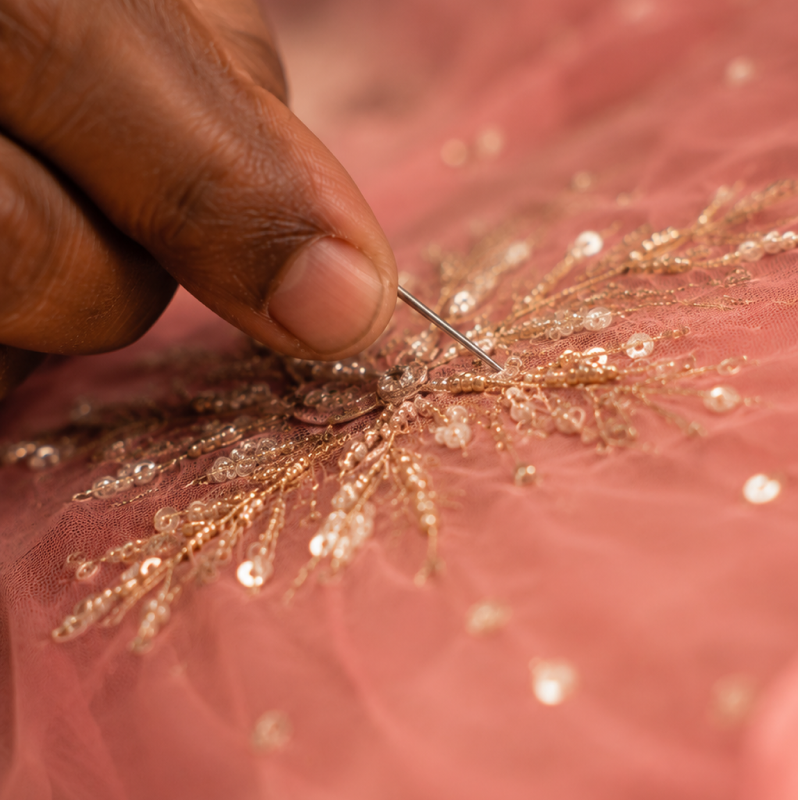
Turn the pallu inside out. In a machine-loomed saree, the back is covered with cut-off loose floats or uniform cross-hatchings. In authentic Kadhwa or Zardozi handloom, each floral buta is individually locked by hand with distinct knotting that remains gentle and smooth against the skin.
“Perfection in handloom does not mean mechanical symmetry. It means a rhythmic, organic cadence where every centimetre bears the breath of its maker.”
— Devi Lal Kumawat, Master Handloom Inspector
2. The Selvedge Pin Marks & Hand Tension
Look closely along the saree's edges. Handloom fabrics are mounted onto wooden stretch frames using tiny iron pins, leaving minute pinhole marks (chhaapa) along the border. These marks are the undeniable fingerprint of authentic hand craftsmanship.
3. Organic Dye Variations vs. Flat Pixel Printing
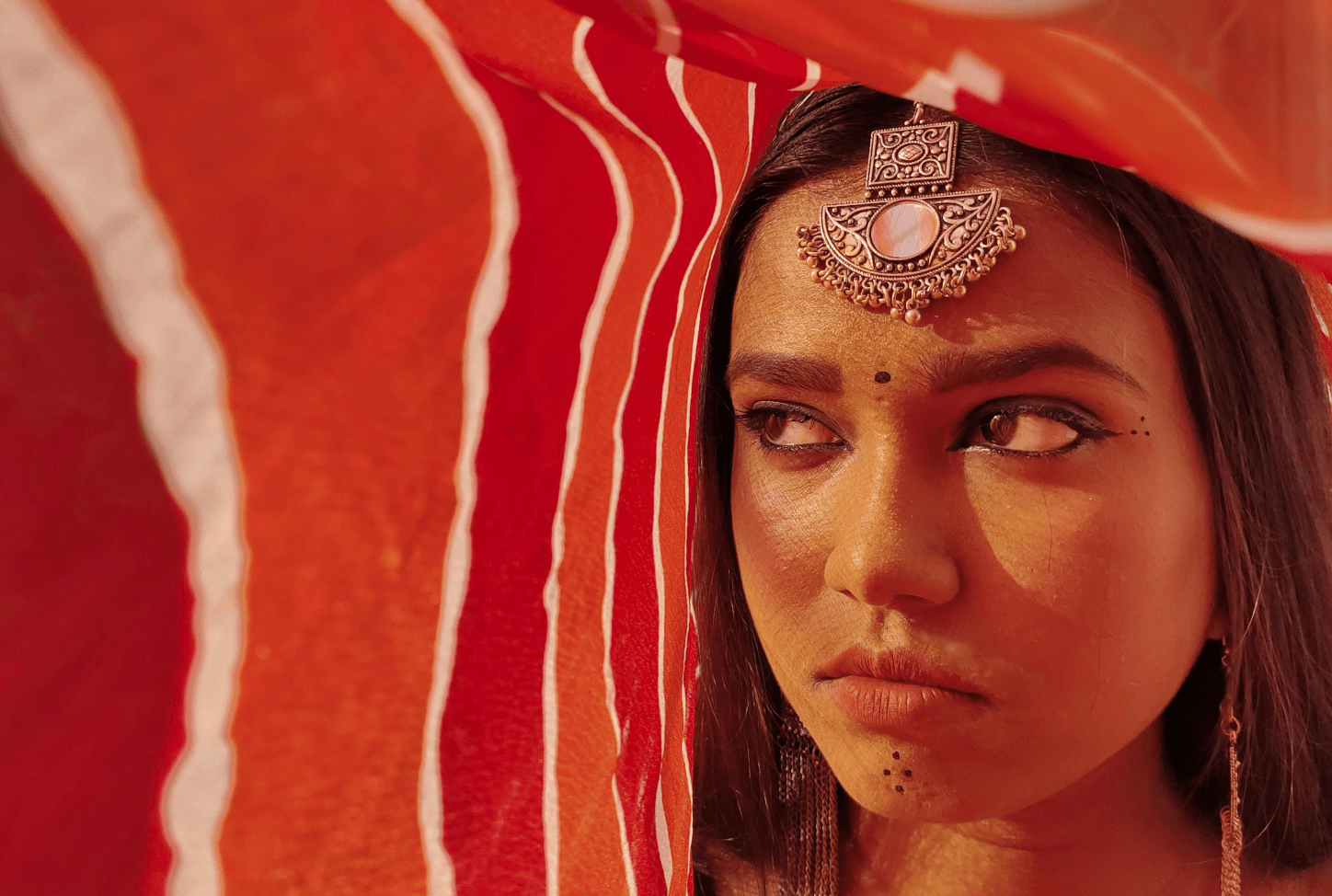
Chemical machine prints have razor-sharp digital edges with zero depth. In contrast, authentic Jaipur resist-dyeing and Leheriya feature subtle, organic micro-gradients at the boundary of each color wave, proving the fabric was hand-dipped into natural dye vats.
4. The Touch Test: Breathability & Weight
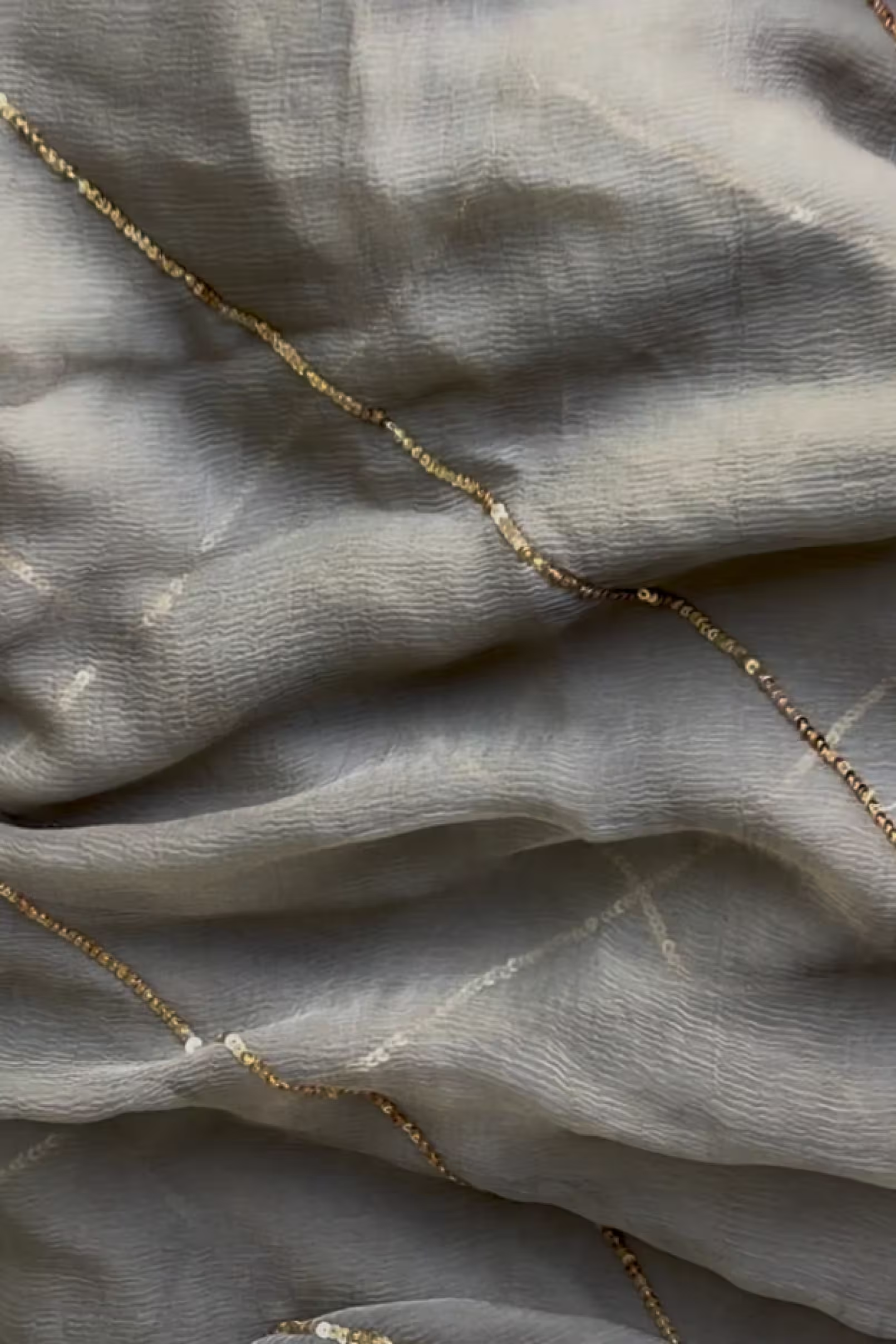
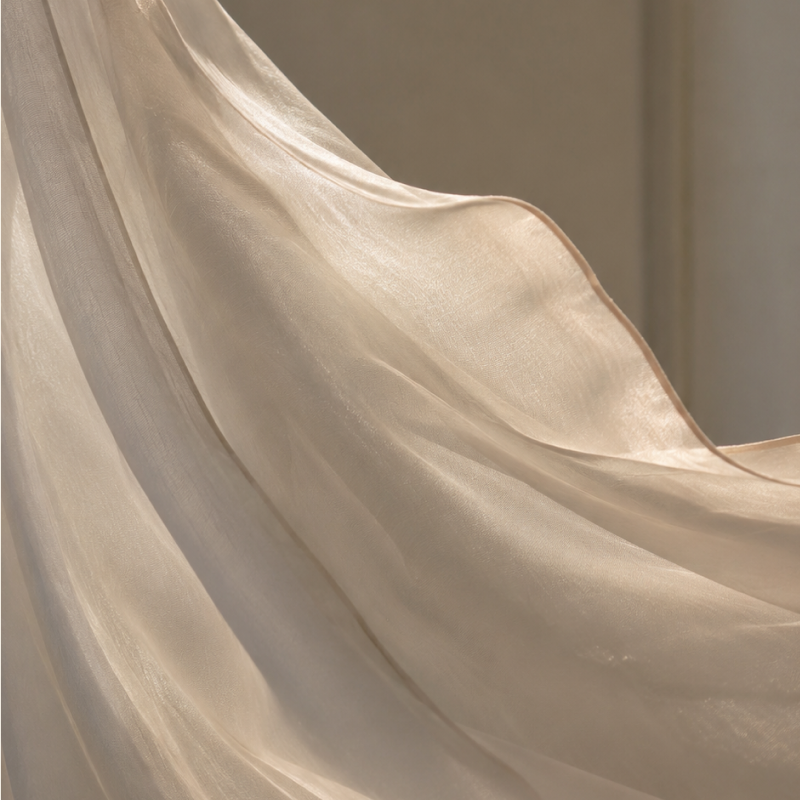
Pure silk, Bemberg cupro, and artisanal organza adjust naturally to ambient temperature. When placed against your cheek, authentic fabric feels cool, gentle, and utterly free of plastic static.

About Master Ramesh Kumar & Team
Leading Kainara's heritage atelier in Jaipur with 25+ years of mastery in royal resist-dyeing, Aari Taari, and bespoke bridal handlooms.