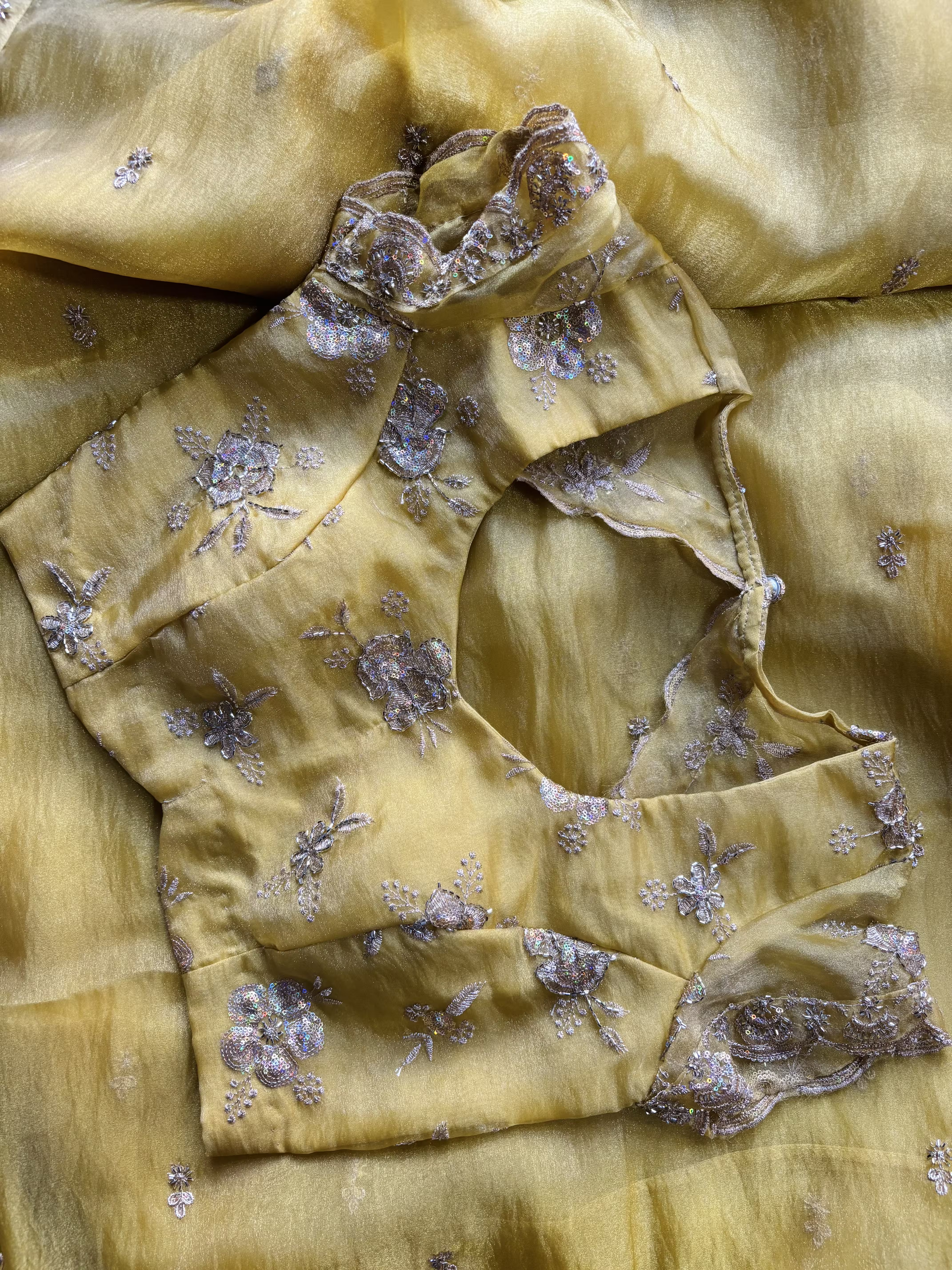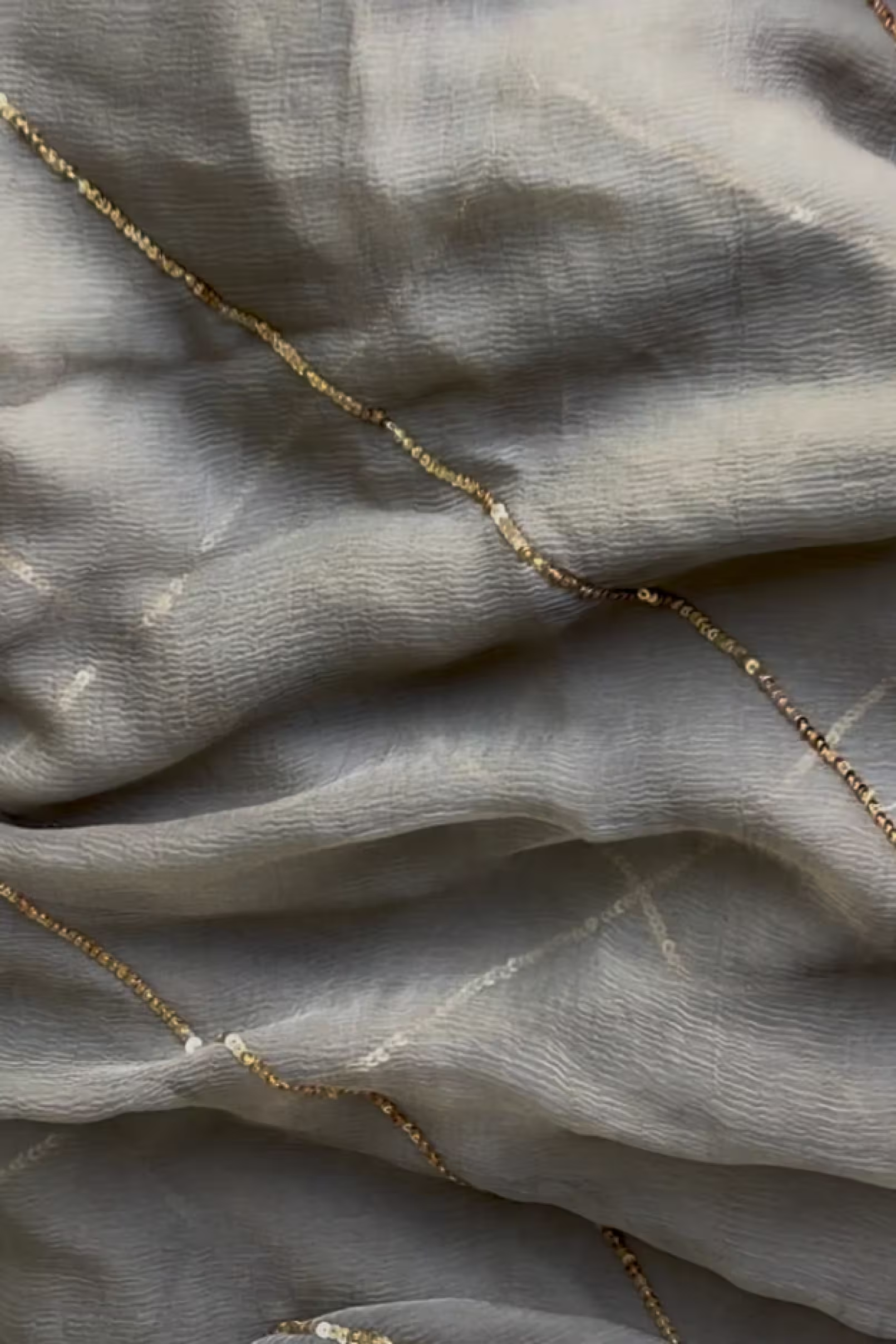





Never store handloom sarees in sealed plastic zipper bags. Natural fibers must breathe to prevent fabric brittleness and metallic zari oxidation. Always wrap them in unbleached pure cotton muslin.
Collecting heirloom sarees is an art form, but preserving them across decades is a sacred science. Handcrafted natural fibers — pure mulberry silk, Bemberg cupro, and metallic gold zari — require mindful care rituals to maintain their luster and tensile strength.
The Deadly Enemy: Why Plastic Bags Suffocate Natural Fibers
Plastic traps atmospheric humidity and releases harmful petrochemical gases over time. This reacts with metallic zari wires, causing them to turn black, while suffocating silk fibers until they tear along the folds.
“Treat a handloom saree like a living organism. When you wrap it in breathable cotton, it breathes in peace and retains its suppleness forever.”
— Sunita Devi, 25-Year Saree Care Specialist
The 6-Month Refolding Ritual to Prevent Crease Splitting
Every six months, take your sarees out of your wardrobe. Air them in gentle shade for 20 minutes (never direct sunlight), and refold them along opposite creases to prevent permanent fiber fatigue.
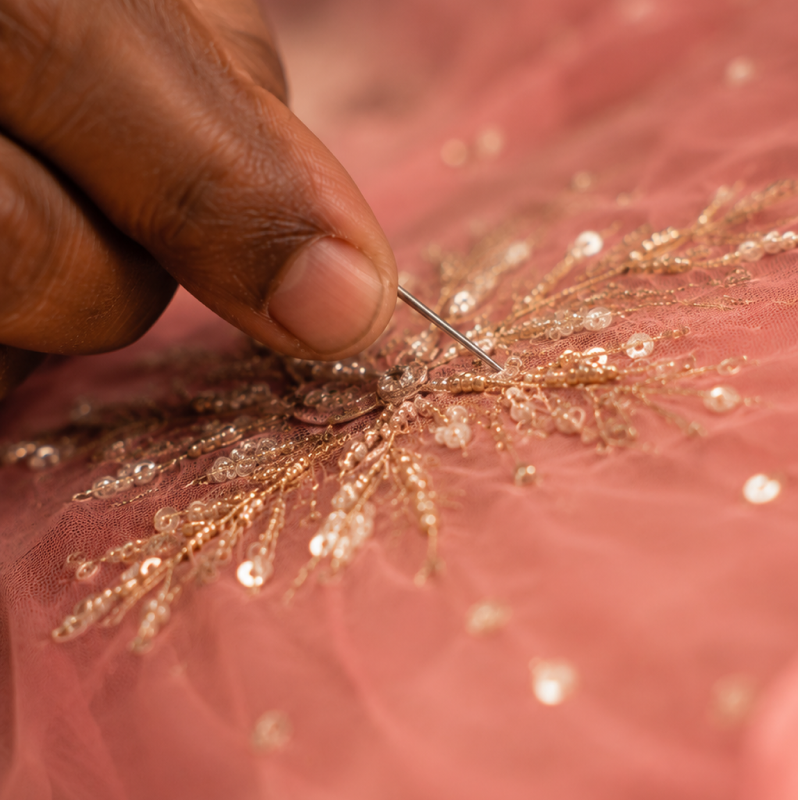

Safe Spot Cleaning: Removing Food Stains Without Bleeding
If food or oil falls on your saree during a celebration, dab immediately with talcum powder to absorb the grease. Never rub or use liquid detergents. Hand it over to specialized silk dry-cleaners.
Natural Moth-Proofing with Cedar & Cloves
Never let synthetic naphthalene or chemical camphor balls touch your saree. Instead, wrap dried cloves, cinnamon bark, and cedarwood blocks in small cotton pouches and place them in the corners of your storage trunk.

About Master Ramesh Kumar & Team
Leading Kainara's heritage atelier in Jaipur with 25+ years of mastery in royal resist-dyeing, Aari Taari, and bespoke bridal handlooms.